
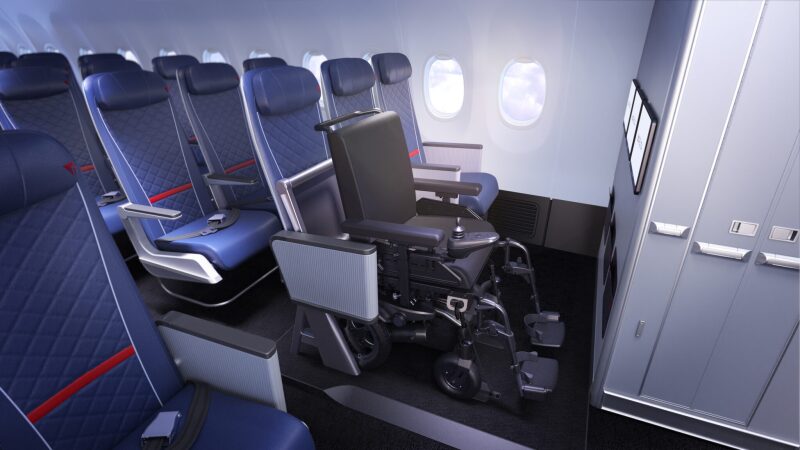
✈️ Aircraft Accessibility: Adaptive Seats for Persons with Locomotor Special Needs
Adaptive seating in aircraft is a critical accessibility requirement, not an optional feature. Thoughtful seat design, combined with trained assistance, ensures that persons with locomotor special needs can travel safely, comfortably, and with dignity.
🌍 Why Adaptive Seating in Aircraft Is Necessary
- Ensures safe, dignified, and comfortable air travel
- Enables independent or assisted transfers from aisle wheelchairs
- Prevents injuries, pain, and medical complications during flights
- Upholds inclusive mobility and equal access to air transport
♿ Key Features of Adaptive Aircraft Seating
1. No Need To Transfer Design
- Movable or flip-up armrests
- Adjustable seat height for easier lateral transfers
- Sliding or rotating seat mechanisms (where feasible)
2. Enhanced Support & Comfort
- Extra lumbar, head, and lateral body support
- Pressure-relieving cushions to prevent sores
- Adjustable recline and foot support
3. Restraint & Safety Systems
- Modified seat belts (four-point or harness-style)
- Secure torso and pelvic support
- Compliance with aviation safety and crashworthiness standards
4. Space & Layout Adaptations
- Priority seating near aisles
- Increased legroom for prosthetics or braces
- Removable seats to accommodate onboard wheelchairs (in some aircraft)
5. Compatibility with Assistive Devices
- Easy storage for mobility aids (folding wheelchairs, crutches)
- Seats designed to align with aisle wheelchairs
- Clear pathways for assisted movement
🧑✈️ Supporting Services Alongside Adaptive Seats
- Trained cabin crew for safe manual handling and transfers
- Pre-boarding and priority deboarding
- Onboard aisle wheelchairs with restraint systems
- Clear pre-flight communication about seating needs
⚖️ Policy & Regulatory Importance
- Aligns with international norms (ICAO, IATA guidance)
- Supports disability rights and non-discrimination laws
- Encourages airlines to adopt universal design principles
🎯 Benefits of Adaptive Aircraft Seating
✔ Reduces physical strain and injury risk
✔ Enhances passenger confidence and comfort
✔ Improves airline service quality and reputation
✔ Promotes inclusive and accessible air travel