
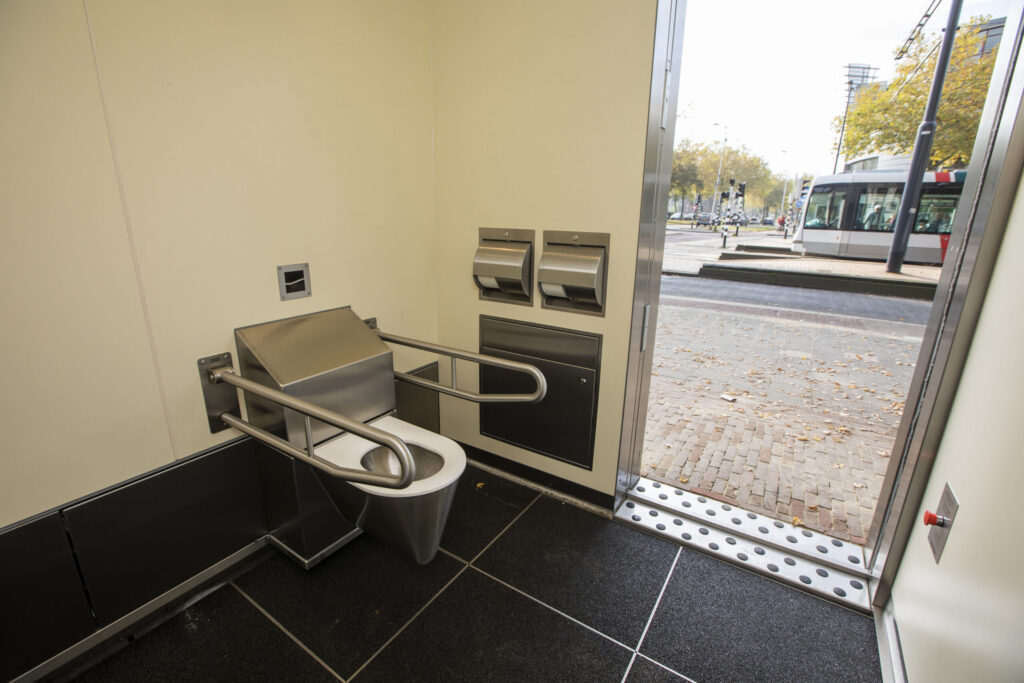
🚻 Inclusive Public Infrastructure: Accessible Restrooms for Persons with Special Needs
🌍 Why Inclusive Restrooms Are Essential
- Ensures dignity, privacy, and independence
- Enables participation in public life (travel, work, education)
- Prevents health risks caused by avoiding public spaces
- Upholds rights-based and universal design principles
♿ Key Features of Inclusive Public Restrooms
1. Physical Accessibility
- Step-free access and wide doorways (minimum 900 mm)
- Adequate turning radius for wheelchairs (1500 mm)
- Non-slip flooring and level surfaces
2. Toilet & Wash Area Design
- Raised toilet seats for easy transfer
- Grab bars on both sides (horizontal & vertical)
- Wall-mounted or height-adjustable washbasins
- Lever-type or sensor-operated taps
3. Support for Different Disabilities
- Mobility impairments: transfer space, foldable support rails
- Visual impairments: Braille signage, tactile floor indicators
- Hearing impairments: visual alarm systems
- Cognitive disabilities: simple icons, clear instructions
4. Gender-Neutral & Caregiver-Friendly Design
- Unisex accessible toilets
- Space for caregivers or assistants
- Adult-sized changing tables where possible
5. Safety & Emergency Features
- Emergency call buttons reachable from toilet and floor level
- Visual and audible alerts
- Anti-bacterial surfaces and good ventilation
6. Cleanliness & Maintenance
- Regular inspections and clear maintenance responsibility
- Durable, easy-to-clean materials
- Clear signage indicating availability and condition
🇮🇳 Relevance in the Indian Context
- Supports the Rights of Persons with Disabilities Act, 2016
- Aligns with Accessible India Campaign (Sugamya Bharat Abhiyan)
- Essential for public spaces like:
- Bus & railway stations
- Schools & colleges
- Hospitals
- Malls, parks, government buildings
🎯 Benefits of Inclusive Restroom Infrastructure
✔ Promotes equality and social inclusion
✔ Increases public space usage by all citizens
✔ Supports elderly, pregnant women, and temporary injuries
✔ Reflects a compassionate and modern society
📝 Conclusion
Inclusive restrooms are not a luxury but a necessity. Designing public infrastructure with accessibility at its core ensures that everyone—regardless of ability—can live with dignity, safety, and independence.